Blocks Rain & Melting Snow
Without a hooded cap, rainwater and wet Ottawa snow fall straight down the flue liner, rusting cast-iron dampers, soaking firebrick mortar, and mixing with soot to create sour indoor odours.

An uncapped or rusted chimney flue leaves your home open to pouring rain, winter snowdrifts, falling leaves, and nesting wildlife. Whether you need a new stainless steel rain cover, a screened animal guard, or a custom multi-flue cap, request a chimney cap installation Ottawa quote below and connect with an independent local service provider.
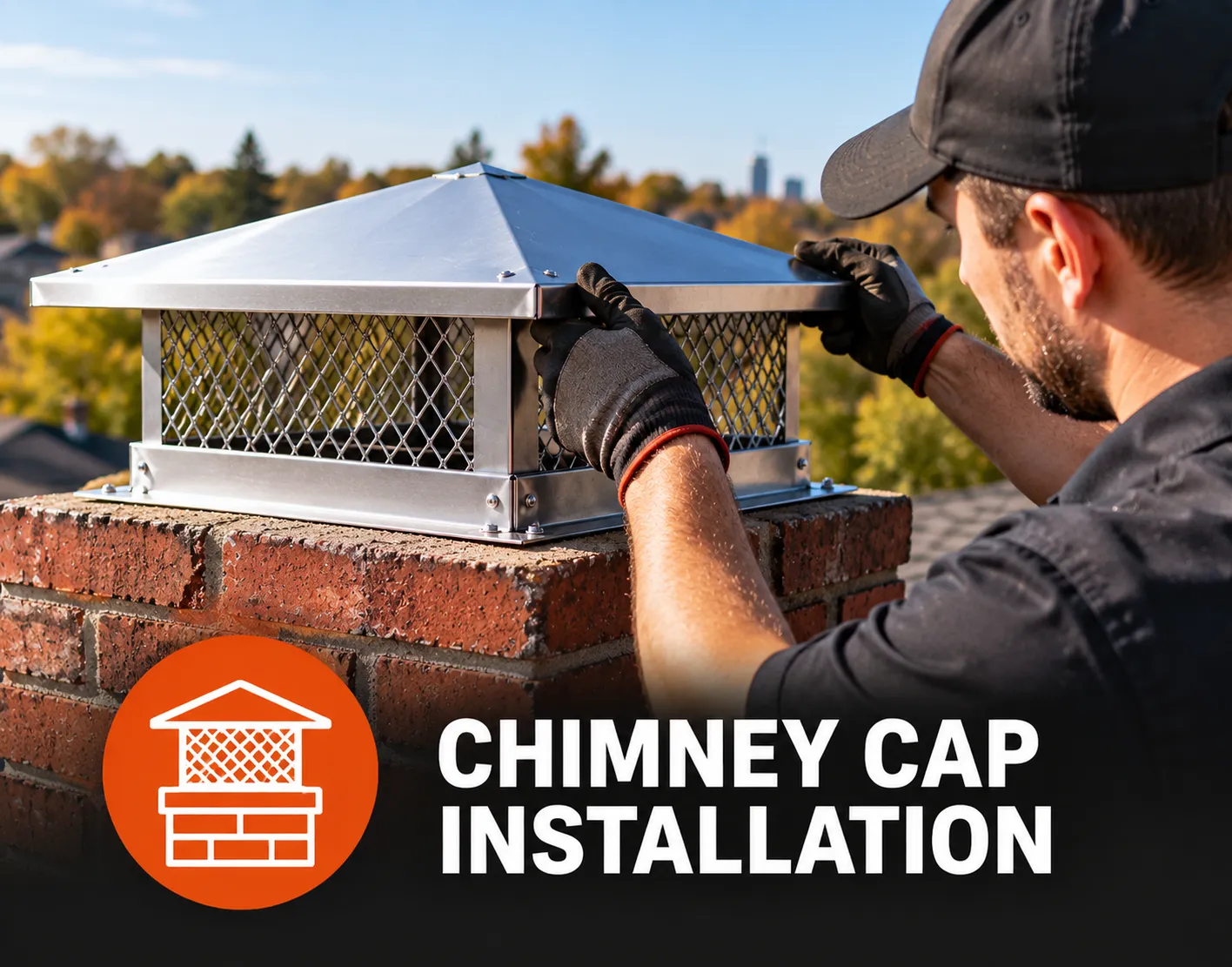
Tell us whether your chimney cap is missing, rusted, or damaged—and share your Ottawa-area location—so an independent local chimney contractor can follow up with you.
Sitting at the very top of your chimney flue, a chimney cap (often called a chimney rain cap Ottawa or flue cover) acts like a protective roof and screen over the open flue liner while still allowing smoke and combustion gases to vent freely outdoors:
Without a hooded cap, rainwater and wet Ottawa snow fall straight down the flue liner, rusting cast-iron dampers, soaking firebrick mortar, and mixing with soot to create sour indoor odours.
An integrated chimney animal guard Ottawa made from sturdy wire mesh helps stop raccoons, squirrels, bats, and chimney swifts from climbing inside the warm flue to build nests.
The side mesh keeps blowing autumn leaves, pine needles, and twigs from clogging the smoke shelf while acting as a spark arrestor to help contain rising embers from wood fires.
Properly sized caps feature open louvered or meshed sides with sufficient free air space so smoke vents smoothly—and specialty wind-directional caps can help reduce gusty downdrafts.
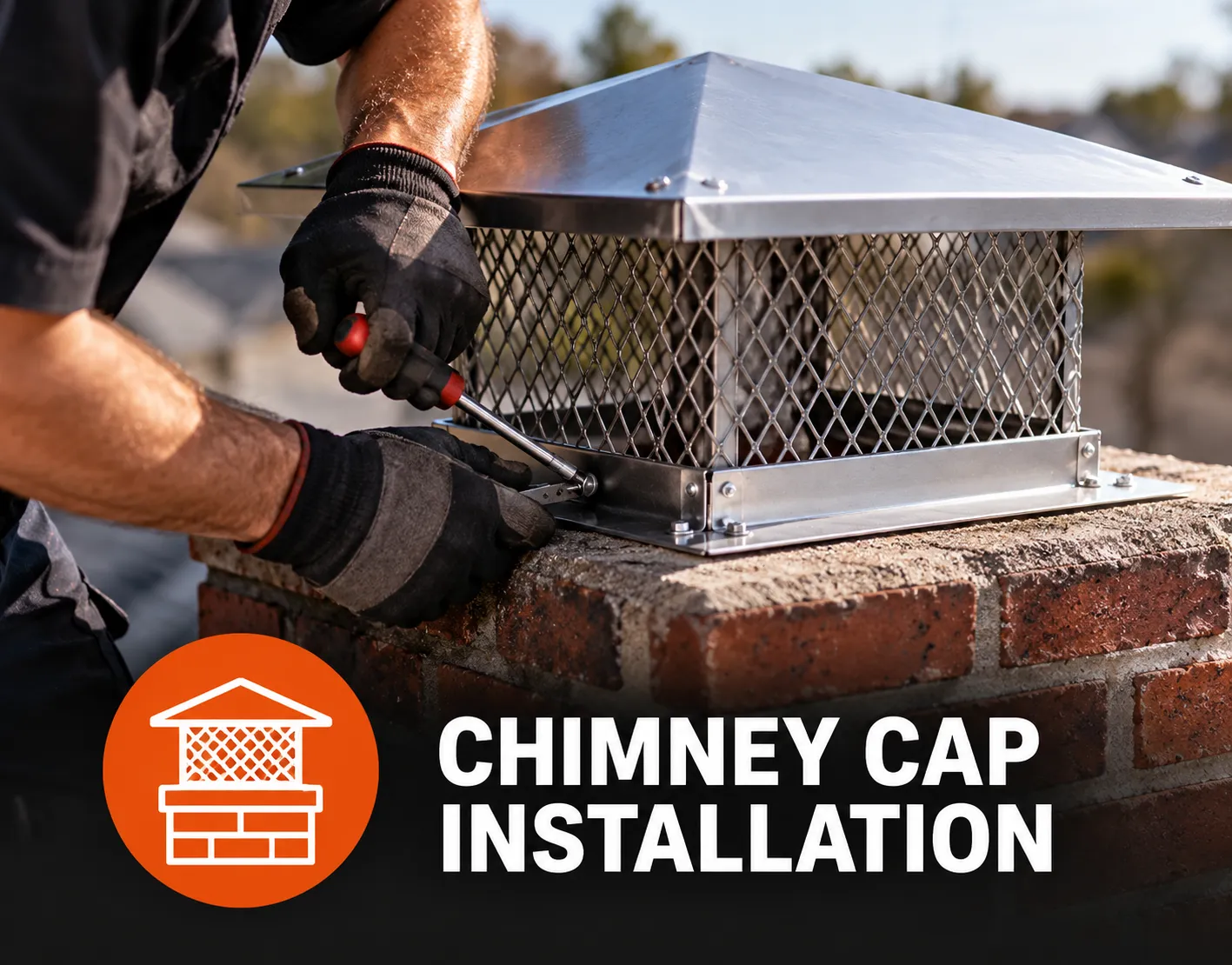
Because the top of the stack sits high above ground level, a damaged or missing cap often goes unnoticed until symptoms appear inside the fireplace. You may want to inquire about chimney cap replacement Ottawa or chimney cap repair Ottawa if you notice:
Chimneys in the Ottawa area vary widely in construction—from single clay-lined masonry flues to multi-flue brick stacks and insulated stainless steel liners. Proper cap selection depends on your specific flue dimensions, appliance type, and crown condition:
Designed to clamp onto or slip inside a single rectangular, square, or round clay flue tile protruding above the chimney crown. Ideal when the clay tile extends several inches above a sound concrete crown.
When a chimney houses two or more side-by-side flues—or when the clay tiles sit flush with the crown—a wide top-mount cap anchors directly to the flat concrete crown, shielding the entire top surface under one roof.
Homes with a flexible or rigid stainless steel chimney liner (common with wood stove inserts or relined flues) require a specialized round liner cap and top plate assembly that secures the liner at the top of the chase.
While basic galvanized steel caps cost less upfront, they eventually rust in Ottawa’s wet climate and corrosive flue gases. Heavy-gauge stainless steel caps resist rust and corrosion far longer.
For chimneys affected by swirling rooftop winds from nearby trees or higher rooflines, specialized wind-directional or baffled caps are sometimes used to help reduce wind-induced downdrafts.
Older heritage chimneys with irregular brick corbelling or oversized dimensions may require a custom-fabricated cap built to match the exact footprint of the masonry stack.
Working at the top of a pitched roof requires proper safety gear and accurate flue measurements. When you connect with independent chimney cap installers Ottawa, the process typically involves three steps:
The technician inspects the top of your chimney to check whether the flue is clear of animal nests, whether the clay tile or steel liner is intact, and whether the concrete crown is solid enough to anchor a cap.
Exact outside or inside flue measurements are taken so the replacement cap fits securely and has appropriate mesh spacing (typically 3/4-inch mesh for wood-burning flues so soot does not ice over in winter).
The old rusted cap is removed if present, and the new cap is fastened squarely to the flue tile, liner collar, or concrete crown using stainless steel hardware or masonry anchors built to withstand high winds.
In Ottawa, an open chimney flue catches everything from heavy autumn downpours to January blizzards and freezing rain. When snow and rainwater enter an uncapped flue and soak into the interior masonry and mortar joints, repeated freeze–thaw cycles cause the wet mortar and clay tiles to expand, crack, and flake apart from the inside out.
Mesh sizing also matters in cold Canadian climates. For wood-burning fireplaces and stoves in Ottawa, experienced technicians select a cap with proper screen clearance and mesh gauge so moist winter flue gases and creosote do not freeze across the screen and block smoke from escaping during sub-zero cold snaps.
Homeowners often hear the terms "chimney cap" and "chimney crown" used together during a roof or fireplace assessment. While both sit at the top of the chimney and protect against water, they are two distinct components:
The chimney cap is the fitted metal hood with wire mesh sides that mounts directly over the open flue hole (or spans across multiple flues).
The chimney crown (or mortar wash) is the sloped concrete or mortar slab poured across the top course of bricks around the flue tile.
Whether you need a replacement rain cap on a brick home in central Ottawa or Nepean, a stainless steel animal guard in Kanata, Barrhaven, or Orléans, or a liner cap for a wood stove in Stittsville, keeping your flue covered is one of the simplest ways to protect your chimney system.
Homeowners across these communities can submit a request through Ottawa Chimney Pros to connect with an independent local service provider, subject to contractor availability.

Helpful answers to common questions about chimney cap pricing factors, sizing, wildlife protection, and installation in Ottawa.
Independent contractors determine their pricing based on the style and material of the cap (for example, a standard single-flue stainless steel cap versus a wide top-mount multi-flue cover or custom-fabricated cap), the height and pitch of your roof, and whether an existing animal nest or damaged crown needs attention at the same time.
You do not need to climb on your roof to measure the flue yourself. An independent chimney technician can safely access the roof, measure the outside dimensions of your clay flue tile, round metal liner, or concrete crown, and recommend the right mounting style for your chimney.
Yes—a sturdy stainless steel chimney cap fitted with heavy-gauge animal-guard mesh and securely anchored to the flue tile or crown is the standard barrier used to prevent birds, squirrels, and raccoons from entering an open chimney. If animals are already nesting inside the flue, the flue should be inspected and cleared before the new cap is bolted down.
If a stainless steel cap is still structurally sound and has simply shifted or had a mounting bolt loosen in high wind, a technician may be able to re-secure it. However, if an older galvanized cap is rusted through, bent, or has torn wire screening, replacing it with a new stainless steel cap is usually more practical and durable.
If your chimney has been uncapped for a long period, scheduling a chimney inspection in Ottawa while the technician is on the roof is a smart step. Rain, snow, and nesting debris may have collected on the smoke shelf or caused moisture wear inside the upper flue that should be addressed before you light a fire.
No. Ottawa Chimney Pros is an online contractor referral website that connects homeowners with independent local chimney service providers. When you submit a quote request, your inquiry details may be shared with an independent provider serving your area so they can discuss product options and installation directly with you.
Request a chimney cap installation quote and connect with an independent local service provider serving Ottawa and surrounding communities.
Request a Chimney Cap Installation Quote