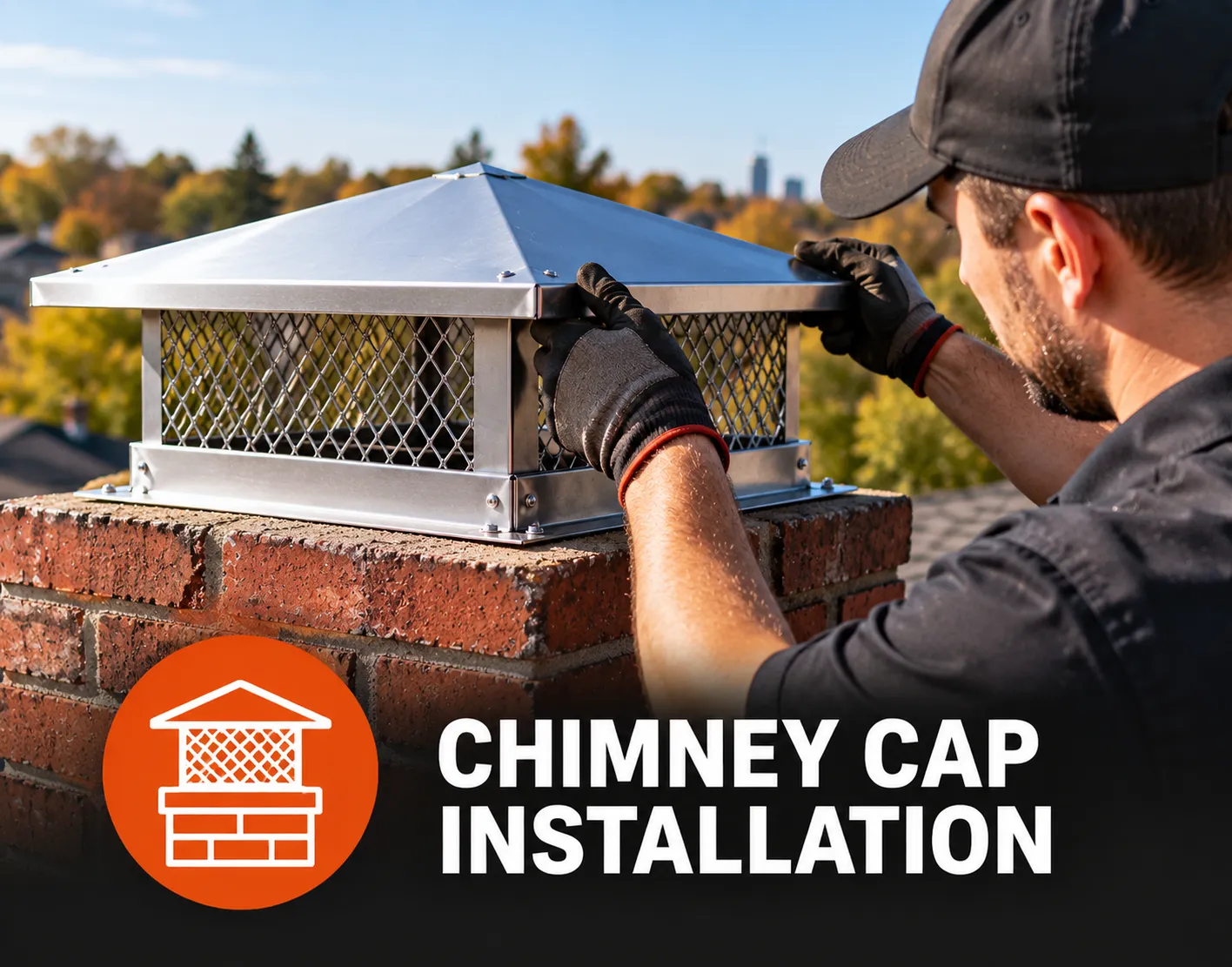
Between heavy autumn rain, sub-zero January cold snaps, and spring freeze-thaw cycles, residential chimneys in the Ottawa region take a beating. Here is how to diagnose water leaks, creosote buildup, and exterior brick wear before lighting your first fire of the season.
To keep a wood-burning fireplace, stove, or masonry flue operating safely through an Ottawa winter, fire safety guidelines from the Government of Canada and the National Fire Protection Association (NFPA 211) emphasize checking five critical areas before peak heating season:
Most chimney problems do not start with a dramatic failure. Instead, they begin quietly above the roofline—a hairline crack in a concrete crown, a missing wire mesh screen, a loose piece of step flashing after a windstorm, or a glaze of creosote building up inside a cold exterior flue.
Because homeowners rarely see the top of their chimney stack up close, small issues often go unnoticed until water drips onto the hearth or smoke rolls back into the living room on a freezing January evening. Through Ottawa Chimney Pros, homeowners across Ottawa and surrounding communities can connect with independent local chimney service providers to address maintenance early—when repairs are simpler and weather conditions are ideal.
Not sure whether a symptom requires a sweep, a mason, or a flashing specialist? Use this quick-reference diagnostic table to match what you see or smell inside your home with the most likely cause and service:
| Warning Sign / Symptom | Most Likely Cause | Recommended Service |
|---|---|---|
| Water puddling inside the firebox after rain or melting snow; chattering or scratching noises behind the damper; twigs dropping onto the grate. | Uncapped flue tile, rusted-out rain hood, or torn animal-guard mesh allowing rain and wildlife directly down the flue. | Chimney Cap Installation |
| Water stains on the ceiling or drywall next to the chimney breast; damp attic rafters where the brick stack passes through the roof deck. | Loose, rusted, or improperly lapped sheet-metal step and counter-flashing at the roof-to-chimney joint (often worsened by winter ice dams). | Chimney Flashing Repair |
| Pieces of red brick or sandy mortar on the roof, deck, or driveway; white chalky staining (efflorescence); leaning upper stack. | Freeze-thaw moisture expansion causing spalling bricks, crumbling mortar joints, or a cracked concrete chimney crown. | Chimney Masonry Repair or Chimney Repair |
| Slow draft or smoke pushing into the room when lighting a fire; black, flaky, or shiny tar-like glaze above the damper; strong sour soot odour in humid weather. | Restricted flue draft from accumulated creosote and soot lining the inner walls of the flue tile or stainless steel liner. | Chimney Cleaning |
| Cloudy or blackened glass doors, ash overflow in the firebox, worn door rope gaskets, or debris sitting on wood stove upper baffles. | Heavy seasonal ash, char, and soot accumulation inside the lower combustion chamber and firebox components. | Fireplace Cleaning |
| Buying or selling an Ottawa home, updating home insurance for a wood-burning appliance, or using a hearth after a long period of inactivity. | Need to verify flue liner continuity, clearances to combustibles, and structural safety before lighting a fire. | Chimney Inspections |
Every time you burn seasoned hardwood in a fireplace, wood stove, or insert, unburned volatile gases rise up the cooler flue pipe and condense along the liner walls as creosote. In Ottawa’s cold climate—especially on exterior chimneys running up an outside wall—flue gases cool rapidly, accelerating creosote condensation.
Creosote progresses through three stages: dusty soot (Stage 1), crunchy tar-like flakes (Stage 2), and hardened, shiny glaze (Stage 3) that is highly combustible. Booking regular chimney cleaning removes buildup from the full height of the flue liner, smoke chamber, and damper assembly so combustion gases vent safely outdoors.
While sweeping clears the vertical flue, thorough fireplace cleaning focuses on the hearth itself—vacuuming fine ash from the firebox floor and ash dump, clearing soot from wood stove baffles and air tubes, cleaning ceramic glass doors, and checking refractory firebrick panels for cracks.
When is the best time to schedule cleaning in Ottawa? Late spring through early autumn (May to September) is ideal. Sweeping corrosive soot out in the spring prevents acidic moisture from sitting in your flue over humid summer months, and booking before October helps you avoid the autumn backlog when the first frost hits the Ottawa Valley.
Water is the single biggest enemy of a masonry chimney. However, calling a general roofer does not always solve a chimney leak because water can enter the stack at several different points. Independent chimney specialists look at three primary leak zones:
If your chimney has a bare clay flue tile sticking out of the top with no metal cover, every rainstorm and snowfall drops water straight down the inside of the chimney. Installing a stainless steel rain cover and wire mesh screen through chimney cap installation shields the flue opening while keeping raccoons, squirrels, and chimney swifts from nesting inside.
Because a brick chimney rests on its own concrete footing while a wood-framed roof expands and contracts with seasonal snow loads, the joint where they meet requires a two-part metal seal (step flashing laced into the shingles and counter-flashing embedded into the mortar joint). When caulking dries out or ice dams lift the metal, targeted chimney flashing repair is needed to stop attic and ceiling leaks.
Submit one simple online request and connect with an independent local chimney service provider in the Ottawa area.
Ottawa experiences dozens of freeze-thaw cycles between November and April—days when daytime sun melts snow against the brickwork, followed by overnight drops well below 0°C.
Brick and mortar are porous materials. Once hairline cracks form in the mortar joints or the sloped concrete crown at the top of the stack, melting snow wicks into the masonry. When that trapped water freezes overnight, it expands by roughly 9%, acting like a microscopic wedge inside the brick. Over a few winters, this cycle causes:
When you request an assessment for chimney masonry repair, an independent mason checks whether the bricks themselves are still solid. If the damage is limited to weathered mortar joints, tuckpointing (repointing)—grinding out the deteriorated mortar and packing fresh, properly matched mortar into the joints—can restore the wall’s weather seal.
If extensive spalling has caused the upper courses above the roofline to loosen or lean, a partial roofline-up rebuild or broader chimney repair may be recommended to restore structural integrity.
Even if you do not see obvious brick fragments on your driveway, internal flue tiles can crack from thermal stress, settling, or past over-firing. In Canada, solid-fuel heating inspections and installations are guided by provincial building codes and standards such as WETT Inc. (Wood Energy Technology Transfer).
Homeowners across the Capital Region typically request chimney inspections in four situations:
From century-old red-brick chimneys in central Ottawa and established two-storey homes in Nepean to tall exterior chases and wood-burning inserts in Kanata, Barrhaven, Orléans, and Stittsville, Ottawa Chimney Pros makes it easy to connect with an independent local contractor for any of the services covered in this guide.
Tell us what you need and connect with an independent local chimney service provider serving Ottawa, Kanata, Nepean, Barrhaven, Orléans, and Stittsville.