
Whether you hear water dripping onto your fireplace grate during an Ottawa thunderstorm or notice yellowish-brown water rings spreading across the ceiling near your chimney breast, pinpointing where water enters the stack is the key to a lasting repair.
Why Is Water Leaking Through My Chimney in Ottawa?
In Ottawa homes, chimney water leaks almost always trace back to one (or a combination) of five exterior entry points rather than the roof shingles themselves:
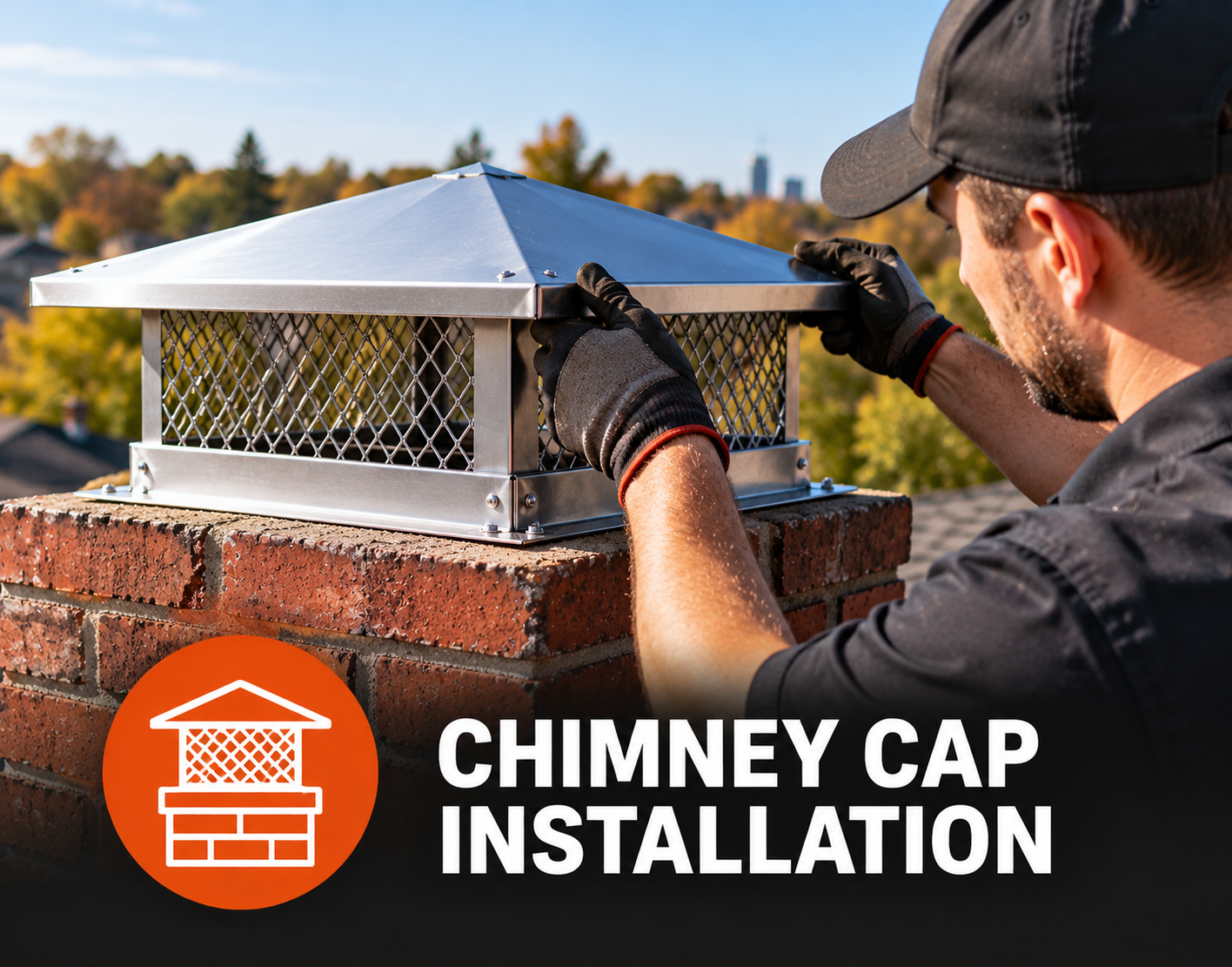
- Missing or Rusted Chimney Cap: Rain and melting snow fall straight down an uncovered flue tile into the firebox—resolved through chimney cap installation.
- Loose or Rusted Roofline Flashing: Gaps in the metal step and counter-flashing where the brick stack meets the roof allow water into the attic and ceiling—resolved through chimney flashing repair.
- Cracked Concrete Chimney Crown: Freeze-thaw cracks in the top mortar slab let water seep down inside the brick chase—resolved through chimney repair.
- Deteriorated Mortar Joints & Spalling Bricks: Wind-driven rain soaks through recessed mortar joints and flaking brick faces—resolved through chimney masonry repair (tuckpointing).
- Interior Flue Condensation: Moist exhaust gases from unlined or improperly sized appliances condensing inside cold exterior flues—evaluated during chimney inspections.
When homeowners spot water stains on the ceiling near their fireplace, their first instinct is often to suspect a roof shingle leak. Yet according to building envelope guidance from the Canada Mortgage and Housing Corporation (CMHC), masonry chimneys are exposed to weather on all four sides above the roofline—meaning water can enter from the top of the flue, through the concrete crown, through vertical mortar joints, or at the roof-to-brick flashing joint.
Through Ottawa Chimney Pros, you can submit one online quote request to connect with an independent local chimney contractor who can inspect the entire stack and pinpoint the real source of the leak.
1. Chimney Leak Diagnostic Chart: Where You See Water vs. Where It Enters
Where moisture shows up inside your house provides an immediate clue about which part of your chimney is failing:
| Where You See Moisture Indoors | Most Likely Exterior Entry Point | Typical Fix to Request |
|---|---|---|
| Drip or puddle directly inside the firebox, rusted cast-iron damper, or wet ash smelling like a damp campfire. | Rain and snow falling straight down an open, uncapped clay flue tile or rusted flue cover. | Chimney Cap Installation |
| Ceiling stains or peeling paint right where the chimney breast meets the upstairs or living room ceiling; wet roof decking in the attic. | Separated step flashing, pulled counter-flashing, or missing cricket/saddle on the upper roof slope. | Chimney Flashing Repair |
| Damp brickwork or musty drywall halfway down the chimney wall; efflorescence (white powder) on exterior or interior brick. | Water soaking through a cracked concrete chimney crown or eroded mortar joints and tracking down inside the brick cavity. | Chimney Masonry Repair & Chimney Repair |
| Black, smelly liquid or tar streaks seeping from stove pipe joints or staining the lower hearth after rain. | Rainwater mixing with heavy soot and creosote deposits inside the flue and firebox. | Chimney Cleaning & Fireplace Cleaning |
2. Cause #1: A Missing, Loose, or Rusted-Out Chimney Cap
Your chimney flue is essentially an open vertical pipe leading from the sky into your living room. Without a hooded metal cap, every millimetres of Ottawa rain and winter snow falls straight down the flue liner.
While some rainwater evaporates on the smoke shelf, heavy downpours and thawing snowdrifts overwhelm the damper, rusting the cast-iron damper plate and dripping onto the firebox floor. Worse yet, when rainwater mixes with soot and creosote inside an uncleaned flue, it creates an acidic, foul-smelling moisture that eats away at mortar joints and stains the hearth.
Arranging chimney cap installation with a heavy-gauge stainless steel rain hood and animal-guard mesh is the fastest, most cost-effective way to stop water and wildlife from entering the open flue pipe. Once the cap is installed, scheduling chimney cleaning and fireplace cleaning clears out any damp soot left behind.
3. Cause #2: Failing Chimney Flashing & Ottawa Ice Dams
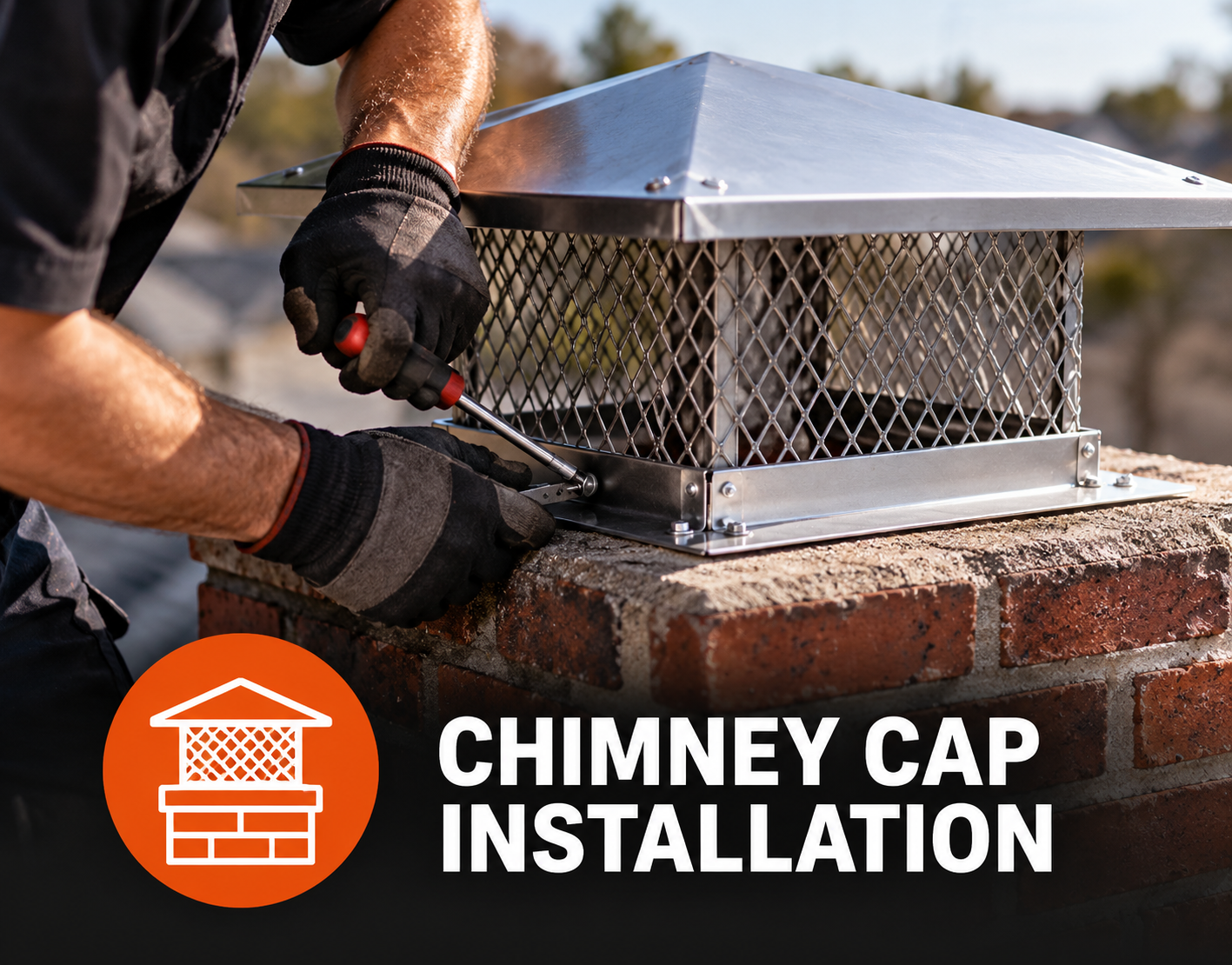
If your firebox is bone-dry after a storm, but you see water stains on the ceiling or walls next to the chimney, the culprit is usually the chimney flashing—the layered sheet-metal seal where the brick stack passes through the roof shingles.
Proper chimney flashing is built in two moving parts so the wood roof and brick chimney can expand and shift independently:
- Base & Step Flashing: L-shaped metal pieces woven beneath each course of roof shingles and extending up the side of the brick wall.
- Counter-Flashing: Metal aprons folded down over the top of the step flashing, with their upper edge tucked into a cut mortar joint (reglet) in the brick.
In Ottawa, winter snow and ice dams frequently pile up behind the wide uphill side of a chimney. If a previous contractor simply smeared roofing tar over old metal instead of installing proper counter-flashing, freeze-thaw movement cracks the sealant and channels meltwater straight into your attic rafters. Targeted chimney flashing repair replaces or re-secures the metal layers to restore a watertight roofline transition.
Need Help Diagnosing a Chimney or Roofline Leak in Ottawa?
Tell us where you are seeing moisture and connect with an independent local chimney contractor serving your neighbourhood.
4. Cause #3: A Cracked Concrete Chimney Crown
At the very top of a brick chimney sits the chimney crown (sometimes called the mortar wash)—a sloped concrete slab that covers the top course of bricks and seals the space around the clay flue liner.
Many older Ottawa chimneys were built with a thin smear of standard brick mortar at the top rather than a poured, sloped concrete crown. Exposed to summer heat and -25°C winter nights, that mortar shrinks and cracks. Once water enters a cracked crown, it runs down inside the hollow spaces between the exterior bricks and the inner flue liner, showing up as damp drywall or ceiling stains below the roofline—often mimicking a flashing leak. Addressing crown damage early as part of chimney repair stops top-down saturation before it ruins the brickwork below.
5. Cause #4: Weathered Mortar Joints & Spalling Bricks

Brick and mortar act like a rigid sponge. When mortar joints weather and recede—or when Ottawa’s freeze-thaw cycles pop the hard outer face off the bricks (spalling)—wind-driven rain soaks directly through the vertical walls of the chimney above the roof.
Because the bricks above the roofline are exposed to rain and snow on all sides, water absorbed by deteriorated mortar joints can travel downward by gravity until it hits the ceiling joists inside your house. Booking chimney masonry repair (tuckpointing eroded joints and replacing spalled bricks) seals the exterior masonry envelope against driving rain.
6. Cause #5: Interior Flue Condensation & Why Leak Diagnosis Matters
Occasionally, moisture inside a chimney does not come from rain at all. When wood fires smoulder at low temperatures—or when an older clay-lined chimney vents a modern appliance without a properly sized stainless steel liner—warm, water-rich flue gases cool down before reaching the top of the stack and condense into liquid water on the inside of the flue tiles.
Because a single chimney can suffer from both a loose counter-flashing and a cracked crown at the same time, scheduling chimney inspections before authorizing repairs ensures the contractor diagnoses every moisture entry point rather than guessing from the ground.
Connecting Homeowners With Local Providers Across Ottawa
Whether your home is in central Ottawa, Kanata, Nepean, Barrhaven, Orléans, or Stittsville, Ottawa Chimney Pros helps you connect with independent local chimney service providers for leak assessments, flashing work, cap installations, and masonry repairs.
- Ottawa
- Kanata
- Nepean
- Barrhaven
- Orléans
- Stittsville
7. Frequently Asked Questions About Leaking Chimneys in Ottawa
Have a Leaking Chimney in Ottawa?
Request a chimney leak assessment and connect with an independent local service provider serving Ottawa, Kanata, Nepean, Barrhaven, Orléans, and Stittsville.